Brahmin Marriage: Dharma, Gotra and the Sacred Union
In Hindu tradition, Brahmin families are among the most meticulous about matching protocols. Marriage is not just a social event but a sacred samskara — one of the 16 rites of passage (shodasha samskaras). The primary differentiators that make Brahmin matching unique are Gotra (patrilineal lineage), Pravara (ancestral Rishi lineage), and Nakshatra (birth star). These three must be checked before any other compatibility.
Different Brahmin sub-communities have varying customs. Iyer (Tamil Smartha Brahmin) and Iyengar (Sri Vaishnava) families follow a 10-point Nakshatra Porutham system from Tamil tradition. North and Central Indian Brahmin families — Maithil, Kanyakubja, Gaud, Chitpavan, Saraswat — use the Ashtakuta Guna Milan (36-point) system along with strict Gotra rules. Kashmiri Pandits and Goud Saraswat Brahmins have their own regional variations.
Gotra and Pravara: The Must-Check Rules
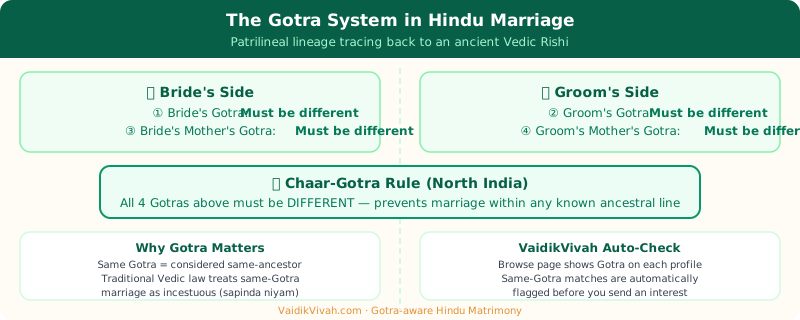
The Gotra system tracks patrilineal descent from one of the original Vedic Rishis (sages). Two people from the same Gotra are considered sapinda — descended from the same ancestor — and marriage between them is prohibited in most Brahmin traditions.
The Chaar-Gotra (four-Gotra) rule, widely followed in North India, states that the bride and groom must differ in four Gotras: (1) the groom's own Gotra, (2) the bride's Gotra, (3) the groom's mother's Gotra, and (4) the bride's mother's Gotra. South Indian Brahmin families traditionally practise cross-cousin or maternal uncle-niece marriages in some regions (especially Tamil Brahmin communities where the practice is accepted).
Pravara — the list of three to seven ancestral Rishis associated with the Gotra — provides additional exclusion. Two people sharing all Pravara Rishis are treated as the same Gotra even if the Gotra names differ.
Kundli Matching for Brahmin Families
Beyond Gotra, families check Ashtakuta Guna Milan (36 points) with a focus on Nadi Dosha (highest weight at 8 points) and Bhakoot Dosha (7 points). A minimum score of 18 is typically expected, with families preferring 25 or above.
For Tamil Brahmin (Iyer/Iyengar) families, the 10-point Nakshatra Porutham system — Dasa Porutham — is primary. Rajju Porutham (a longevity check) and Mahendra Porutham (well-being) carry particular importance. Jathagam (horoscope) compatibility and Lagna (ascendant) are also examined by the family priest.
VaidikVivah's Kundli tool supports both systems and includes Gotra fields to help Brahmin families instantly screen for Gotra conflicts.
Key Wedding Rituals in Brahmin Vivah
The Brahmin wedding ceremony is one of the most elaborate in Hindu tradition. Key rituals include:
Kashi Yatra: Unique to several Brahmin communities, the groom pretends to leave for Kashi (Varanasi) to pursue scholarship, and the bride's father persuades him to marry instead. This ceremony is performed with an umbrella, walking stick and fan.
Nandi Shraddha: Ancestral blessings are sought before the wedding — a prayer offering to departed ancestors, performed typically the evening before the main ceremony.
Vivah Panchami or Auspicious Muhurat: The wedding date (Muhurat) is chosen by a Jyotishi based on the couple's Kundlis, matching Nakshatra, Tithi, and Lagna. Most Brahmin families avoid Adhik Maas (intercalary months) and Chaturmas.
Saptapadi: The couple takes seven steps (pheras) around the sacred fire, each step with a specific vow. This is the legally binding act under the Hindu Marriage Act. The groom recites Sanskrit vows; the bride responds. In South Indian traditions, the first phera is often counter-clockwise.
Kanya Daan: The father gives the bride's hand (formally presents her) to the groom — considered one of the most sacred acts a father can perform. The priest ties both hands together with a sacred thread.
What Brahmin Families Look for in a Match
Beyond the ritual requirements, Brahmin families typically weigh: educational and professional qualification (highly valued historically due to scholarly tradition); values alignment — especially around vegetarianism, family devotion, and religious practice; family background and reputation; and the horoscope compatibility report.
Modern Brahmin families, especially in urban areas and the diaspora, often balance traditional Kundli matching with practical life-compatibility factors: the couple's ability to communicate, shared goals, and lifestyle compatibility. VaidikVivah's extended compatibility report helps families evaluate both the traditional (36-point Guna Milan + Gotra) and modern dimensions of compatibility.